
The program
Long-horizon business incubation
Paced to the years a company really takes, with a gate at each point where most new businesses close.
-
Dream Survey
- Diagnostic and roadmap Keeps: A baseline readiness scorecard and an agreed plan
- Corporate and ownership records in order Keeps: A reconciled ownership ledger and instrument register
- Brand and positioning Keeps: Messaging, identity and web presence
 Line A
-
Build Blueprint
- Platform baseline and security posture Keeps: A security baseline and a first release
 Line B
- Customer evidence Keeps: An evidence index traced to sources
 Line C
- Financial model Keeps: Scenarios and assumptions
 Line D
- Platform baseline and security posture Keeps: A security baseline and a first release
-
Grow Territory
- Operating rhythm Keeps: Metrics, reviews and a working cadence
- Records and materials complete Keeps: An organized data room and presentation materials
 Line F
One flight, from first proof to a settled orbit
WE is a long-horizon business incubation and consulting firm. A founder brings an idea or an early product. WE brings a method, a way of steering a team, and a dedicated team that WE steers, working only on that company. WE stays for as long as the work is useful.
The program is fully remote, so nobody relocates and there is no office to visit. Roles on the team change by notice, and WE manages the team and any subcontractors on the founder’s behalf.
The work runs in three stages and five phases, paced to the clock new businesses actually follow: the first proof and the plan, the first release and the first customers, repeatable sales, and the years of becoming established. Each phase closes at a checkpoint, and every week the founder sees the status in writing and says yes or no to the next cycle’s plan.
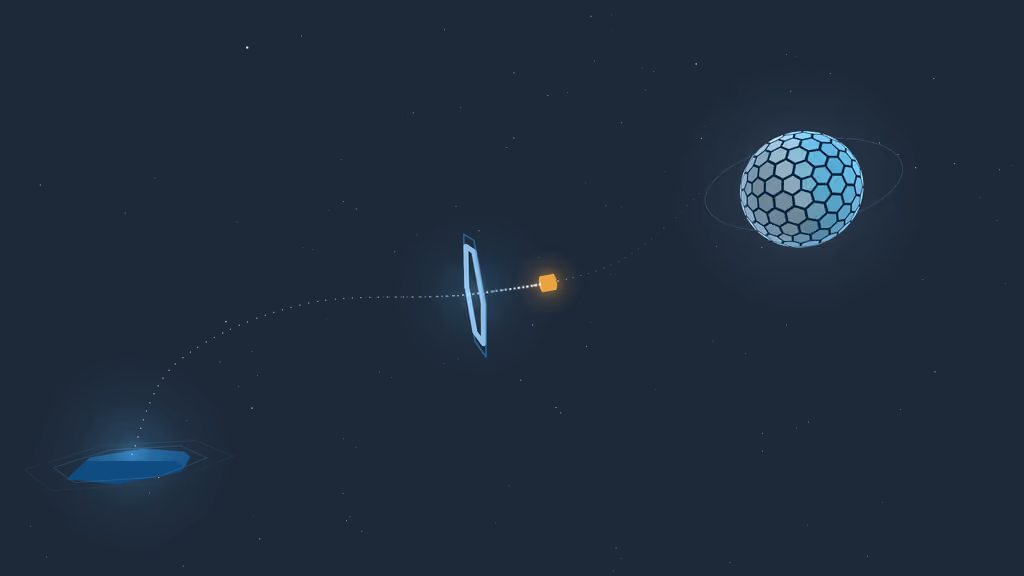
Five phases, matched to the business clock
Typical windows from public data. Your plan sets your own pace, and gates are reached by milestones, not by dates.
The five phases on a ten-year axis
-
Ignite
Months 0 to 6
A Star ignites
First proof and the written plan.
D.R.E.A.M. Playbook
- Discover
- Relate
- Empower
- Advise
- Motivate
O.R.B.I.T.A.L. Plan
- Objective
- Resources
- Budget
- Indicators
- Transport
- Activities
- Logistics
Checkpoint Six-month review
-
Build
Months 6 to 18
A Star on its Track
The first release and the first customers, through the steepest year.
S.T.A.R.T.U.P. Initiative
- Structure
- Think Tank
- Analysis
- Relations
- UX/UI
- Publications
A.N.D.R.O.I.D. Ops
- Advance
- Network
- Design
- Research
- Optimize
- Implement
- Deliver
Checkpoint Year-one Orbit Review
-
Launch
Months 18 to 36
Lift-off: the Star becomes a Super Star
Repeatable sales and product-market fit.
L.A.U.N.C.H. Sequence
- Logistics
- Application
- Users
- Navigation
- Channel
- Hive
Checkpoint Year-three Orbit Review
-
Grow
Years 3 to 5
The Super Star gathers moons
Becoming an established company.
G.R.O.W.T.H. phase
- Gauge
- Research
- Organize
- Work
- Target
- Health
Checkpoint Year-five Orbit Review
-
Orbit
Year 5 onward
A settled solar system
Running steady and planning what comes next.
Event Horizon
Checkpoint WE steps down by notice
A company that is already operating starts at the phase it is in. The readiness review places it.
Mission Control, every week
- Every week. A written status, and you say yes or no to the next cycle’s plan.
- Every month. A service report and a review.
- Every quarter. A business review against the plan.
- Every checkpoint. An Orbit Review at the close of each phase, timed to the points on the clock where most businesses close.
Three stages, three altitudes
Dream surveys the ground, Build draws the blueprint and Grow works the territory. Each stage ends with things the company keeps.
What the program is not
- It is not funding. WE makes no promise of funding.
- It is not legal, tax or accounting advice. Your counsel and your accountant stay your own.
- It is not an office, a campus or a set of in-person sessions. The work is fully remote and written down.
In this section
- Dream: find the first proof Ignite. Months 0 to 6, typically.
- Build: through the steepest year Build and Launch. Months 6 to 36, typically.
- Grow: becoming established Grow and Orbit. Year three onward.
- How the program works From first conversation to Day One.
- The team WE steers The roles a team can include, and who steers it.
- The digital incubation model What fully remote means in practice.
- Who WE works with The founders and companies WE builds with.
The long game
Move fast every week. Build for the decade.
The program has two speeds on purpose. Every week the team plans, ships and reports. Across the years the plan stays patient, because the data says the first five are the hardest.
Every week
Fast, and written down.
-
 1 Plan The week’s cycle is set in writing.
-
 2 Build A dedicated team ships the work.
-
 3 Report A written status, every week.
-
 4 Decide You say yes or no to the next cycle.
Every year
Patient, because the odds turn slowly.

- U.S. Bureau of Labor Statistics, Business Employment Dynamics, Table 7 , Opened in the year to March 2024
- U.S. Bureau of Labor Statistics, Business Employment Dynamics, Table 7 , Opened in the year to March 2020
- U.S. Bureau of Labor Statistics, Business Employment Dynamics, Table 7 , Opened in the year to March 2015
- Month 1 First written status WE reports in writing from the first week.
- Month 7 First payroll 1 Typically 2.29 quarters after a business applies, for the 2021 applications.
- Year 1 77.9% still operating 2 One year after opening.
- Year 3.5 Counted as established 3 A business is called established at 42 months.
- Year 5 51.4% still operating 2 Five years after opening.
- Year 10 34.7% still operating 2 Ten years after opening.
Where milestones typically fall, and how many new businesses are still operating at years one, five and ten. Each survival figure comes from a different opening-year group; the sources name them.
- U.S. Census Bureau, Business Formation Statistics , 2021 and 2005 applications
- U.S. Bureau of Labor Statistics, Business Employment Dynamics, Table 7 , Opened in the year to March 2024
- Global Entrepreneurship Monitor, U.S. report 2025/2026 (Babson College) , Definition
The wider ecosystem
Join the programs that fit. WE stays for the long run.
WE does not compete with the programs around you. Founder programs, coworking spaces, investor communities and public funding each do something WE does not, and most founders do best using several. Join the ones that fit. WE works alongside, for as long as the work is useful.
-
Founder programs
Structured, time-boxed programs with a peer group and a deadline.
-
Coworking spaces
A desk, a room and people who are building too.
-

Investor communities
Angel groups and investor relations events where you meet the people who fund companies.
-

University and lab programs
Research, labs and technology transfer for science-based companies.
-

Local small business support
Advisers, training and regional networks close to home.
-

Public funding
Federal research awards such as SBIR and STTR.
Independent programs that WE encourages founders to consider. No affiliation or endorsement is implied.

Public funding
Apply to SBIR and STTR.
The Small Business Innovation Research and Small Business Technology Transfer programs fund small businesses to do research and development. If your company is building something technical, apply, and keep applying.
WE helps founders prepare alongside. WE is not an agency and cannot promise an award.
- 1 Find The agency topics that match what you build.
- 2 Prepare The registrations, the plan and the proposal.
- 3 Apply Submit, learn from the review and go again.
Where is your company on the clock?
Start a readiness review. WE arranges a conversation, then sends a one-page read of where your company sits on the business timeline and what the next phase needs.